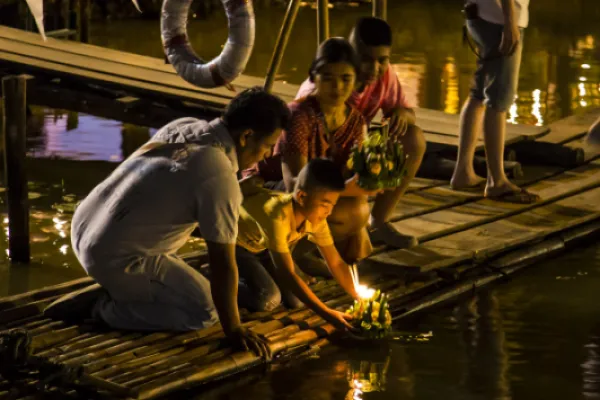
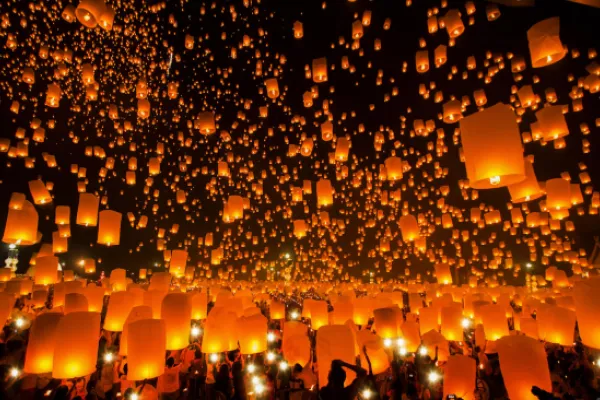
On a festival evening in Chiang Mai, the initial signs of celebration can often be found close to the ground. People fold banana leaves into small rafts, and market stalls are filled with flowers and candles. Temples display rows of oil lamps, while families make their way toward the river.
While most travel photographs tend to focus on the beautiful lanterns floating in the sky, it’s important to understand the significance of Loi Krathong and Yi Peng by paying attention to what people do before these photos are taken.
One festival on the water, another rooted in Lanna life
Loi Krathong is celebrated throughout Thailand. A krathong is a small floating arrangement of banana leaves, flowers, a candle, and sometimes incense. People lower it into a river or pond, often with a quiet wish or a moment of reflection.
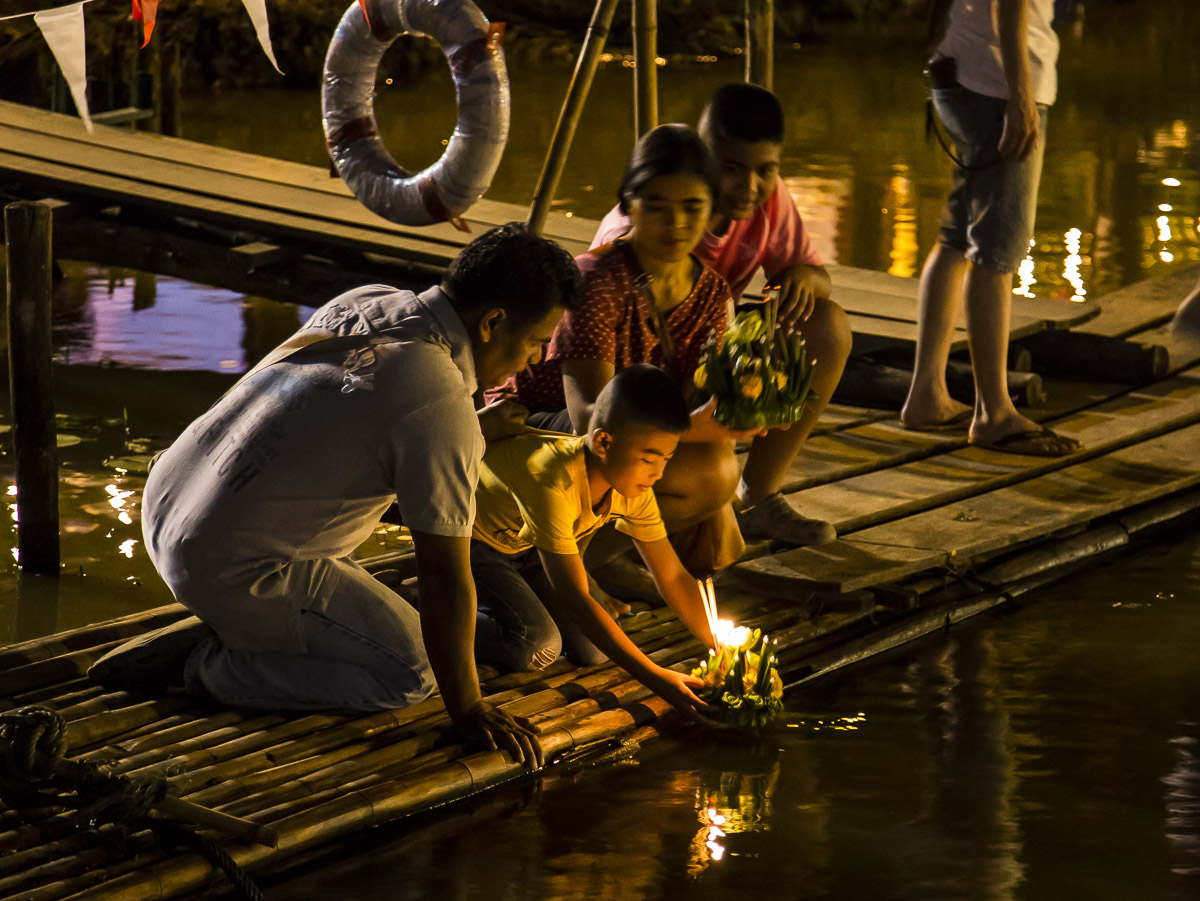
The tradition is commonly associated with thanking Phra Mae Khongkha, the goddess of water, and asking forgiveness for how people have used the waterways. For others, floating a krathong is also a personal way to mark the end of a difficult year or hope for better things ahead. Not every family explains the ritual in the same way.
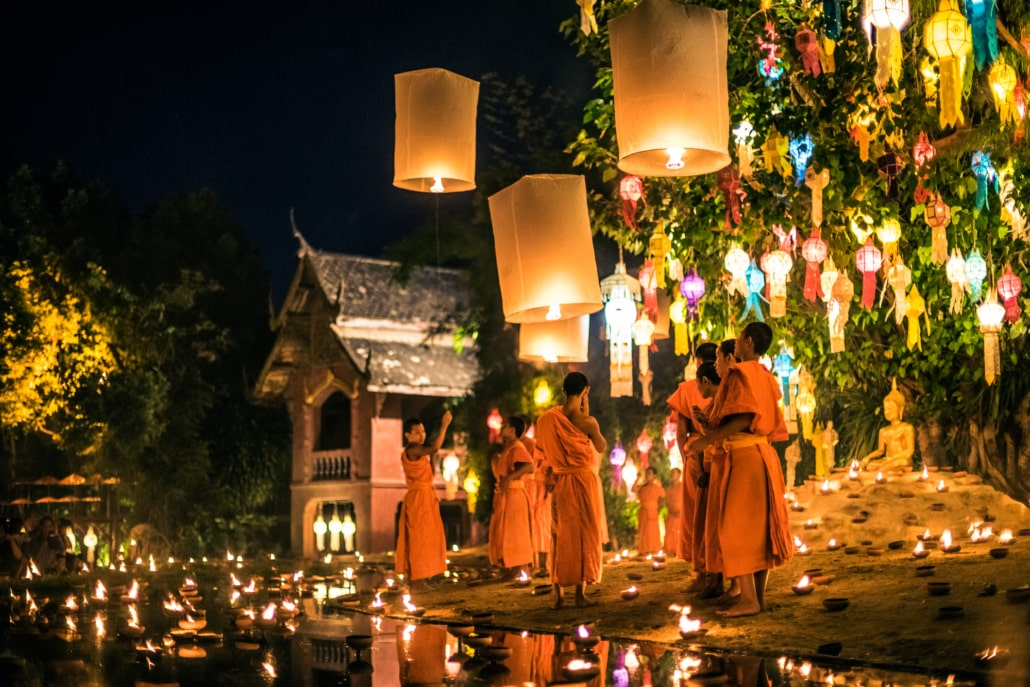
Yi Peng is part of the old Lanna traditions of northern Thailand. The name refers to the full moon of the second month in the Lanna lunar calendar. In Chiang Mai, it brings together Buddhist observances, hanging paper lanterns, small clay oil lamps called phang prateep, and community celebrations. Sky lanterns are one part of that story, but far from the only part.
The festivals can be joyful and busy, but some of their best moments are small. A parent helping a child arrange flowers on a krathong. Someone is pausing at the river before letting theirs go. Neighbors setting out lamps or decorating a gate. A family visiting a temple together.
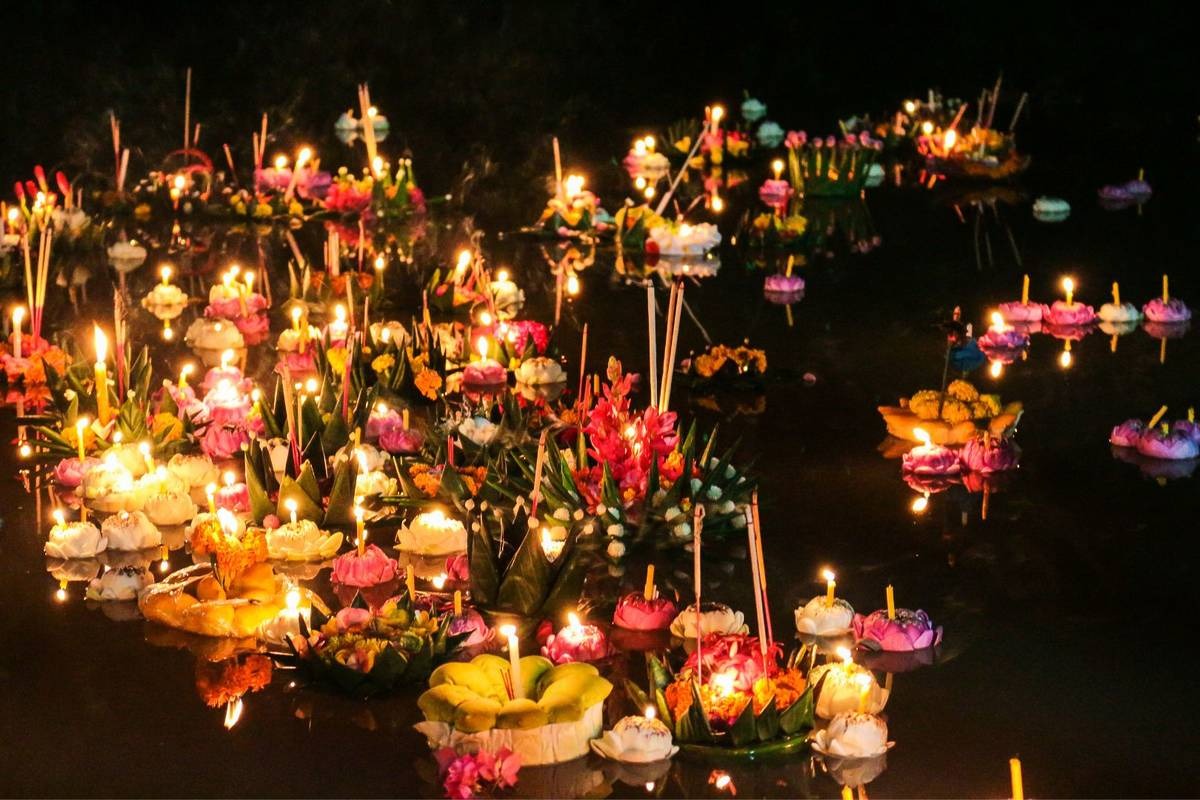
For many people, these are familiar rituals passed down through generations. They may pray for loved ones, give thanks for the past year, or simply enjoy doing something the family has always done together.
That is what can be easy to miss when a trip is planned around a single photograph. You do not have to release a sky lantern to take part in the spirit of Yi Peng. Much of it is already happening in the streets, temples, and homes around you.
At one time, sky lanterns were released much more freely around Chiang Mai. As the city grew and the festival attracted more visitors, concerns about fires, falling lanterns, and the nearby airport led to tighter controls.
For the 2026 festival, authorities have reinforced no-release rules in central Chiang Mai. The large, synchronized sky lantern events that travelers recognize from photographs are now associated with licensed venues outside town. Those events can be wonderful, but they are separate from the everyday community traditions taking place in the city.
Inside Chiang Mai, there is still plenty to see: hanging lanterns, oil lamps, temple decorations, cultural performances, and krathongs along the Ping River. It may be a different scene from the image you had in mind, but it is no less connected to the place.
Loi Krathong also comes with an environmental question. Even a beautiful krathong has to go somewhere after the candle burns out. Some commercially made versions contain plastic, foam, or other materials that do not belong in the river.
Many local organizers encourage the use of natural materials and try to manage cleanup afterward. As a visitor, choosing a small, plastic-free krathong and using designated floating areas are simple ways to be more thoughtful. You can also share one with the people you are traveling with.
The same respect applies at temples and neighborhood celebrations. Ask before taking close-up photos, keep paths clear, and remember that a ceremony is not being staged for an audience.
If you are here for the festival, spend some time away from the busiest viewing spots. Wander through a local market before sunset. Notice the decorations at the city gates. Stop by a temple where visitors are welcome, or watch families gather near the river.
You do not need a packed itinerary to appreciate the festivals. Sometimes it is enough to know what you are looking at and why it matters to the people around you.
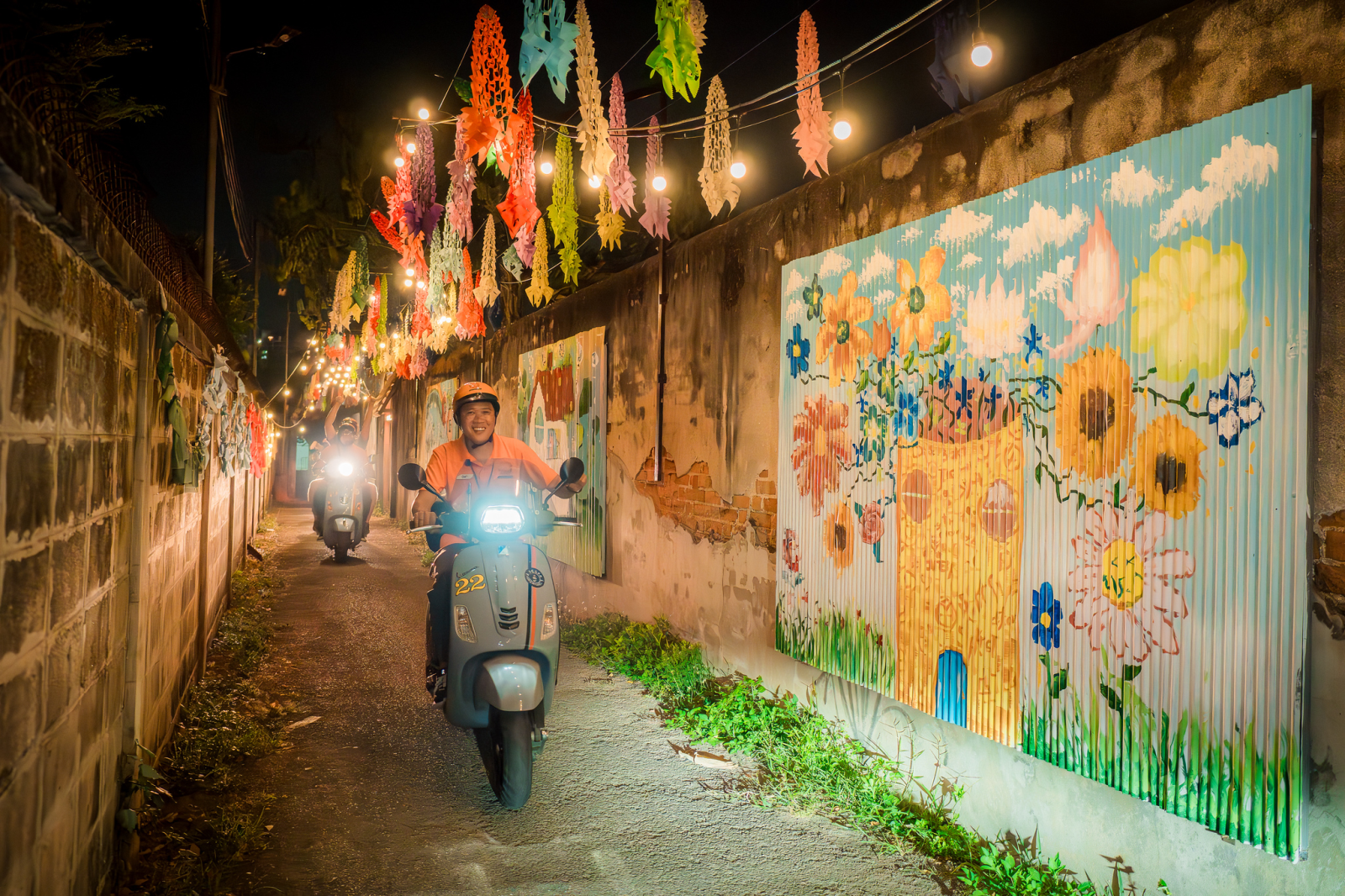
A festival offers a special glimpse of Chiang Mai, but the everyday city is worth knowing too. Our Chiang Mai After Dark tour takes you through neighborhood streets, local food spots, and night markets with a local guide and an experienced Vespa driver. It is built around the food and places people enjoy year-round, rather than a staged festival ceremony.
If you have another evening in town, come along. We would love to show you a few of our favorite places.
Explore Chiang Mai After Dark!

© Copyright by Vespa Adventures.